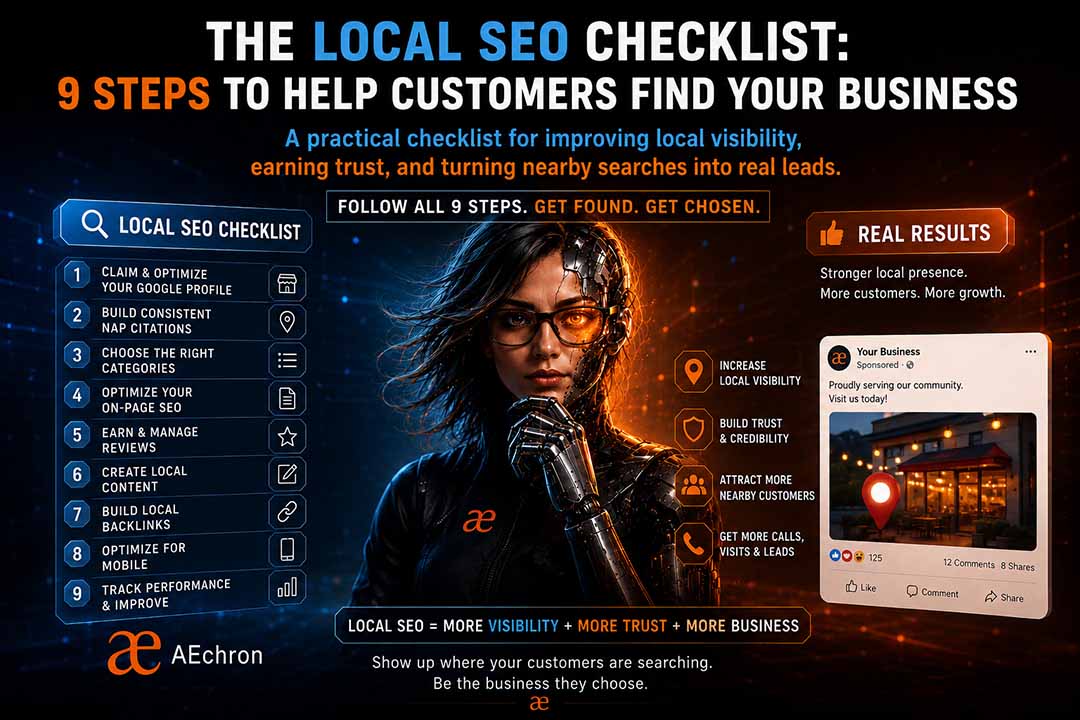
When someone searches for a service nearby, Google has to decide which businesses are relevant, trustworthy, and close enough to recommend. Local SEO is the work of making those signals clear, and it fits inside a broader AI-powered growth plan.
You do not need to do everything at once. Start with the basics, make each detail accurate, and improve one step at a time.
1. Complete your Google Business Profile
Fill out your business category, services, hours, phone number, website, and service area. Add real photos and keep holiday hours current. A complete profile gives Google more confidence and helps customers take action faster.
2. Use the same contact details everywhere
Your name, address, and phone number should match across your website, Google profile, directories, and social pages. Small inconsistencies can make your business harder to verify.
3. Create a page for each core service
A single homepage cannot explain every service well. Give each important offering a focused page with useful details, common questions, and a clear next step. This also helps avoid the problems covered in why small business websites do not rank on Google.
4. Mention the areas you actually serve
Use location details naturally in your copy. Explain where you work and what makes your service relevant to customers in those areas. Avoid repetitive city lists that do not help the reader.
5. Ask happy customers for reviews
Reviews build trust and help customers compare options. Ask shortly after a successful job, make the process simple, and respond professionally to every review.
6. Improve your website experience
- Make the site easy to use on a phone.
- Keep pages fast and readable.
- Put your phone number and contact action where visitors can find them quickly.
7. Add useful local content
Publish answers to questions customers ask before buying. A clear guide, checklist, comparison, or short video can earn search visibility while helping a real person make a decision. For ideas, see these simple video content examples.
8. Add basic technical signals
Use descriptive page titles, helpful meta descriptions, and LocalBusiness schema. These details make your pages easier for search engines to understand.
9. Measure calls, forms, and rankings
Traffic alone is not the goal. Track the actions that matter to your business and improve the pages that lead to qualified inquiries.
Want a clear starting point?
Aechron can review your website and identify the local SEO improvements most likely to move the needle.
Request a free SEO audit →