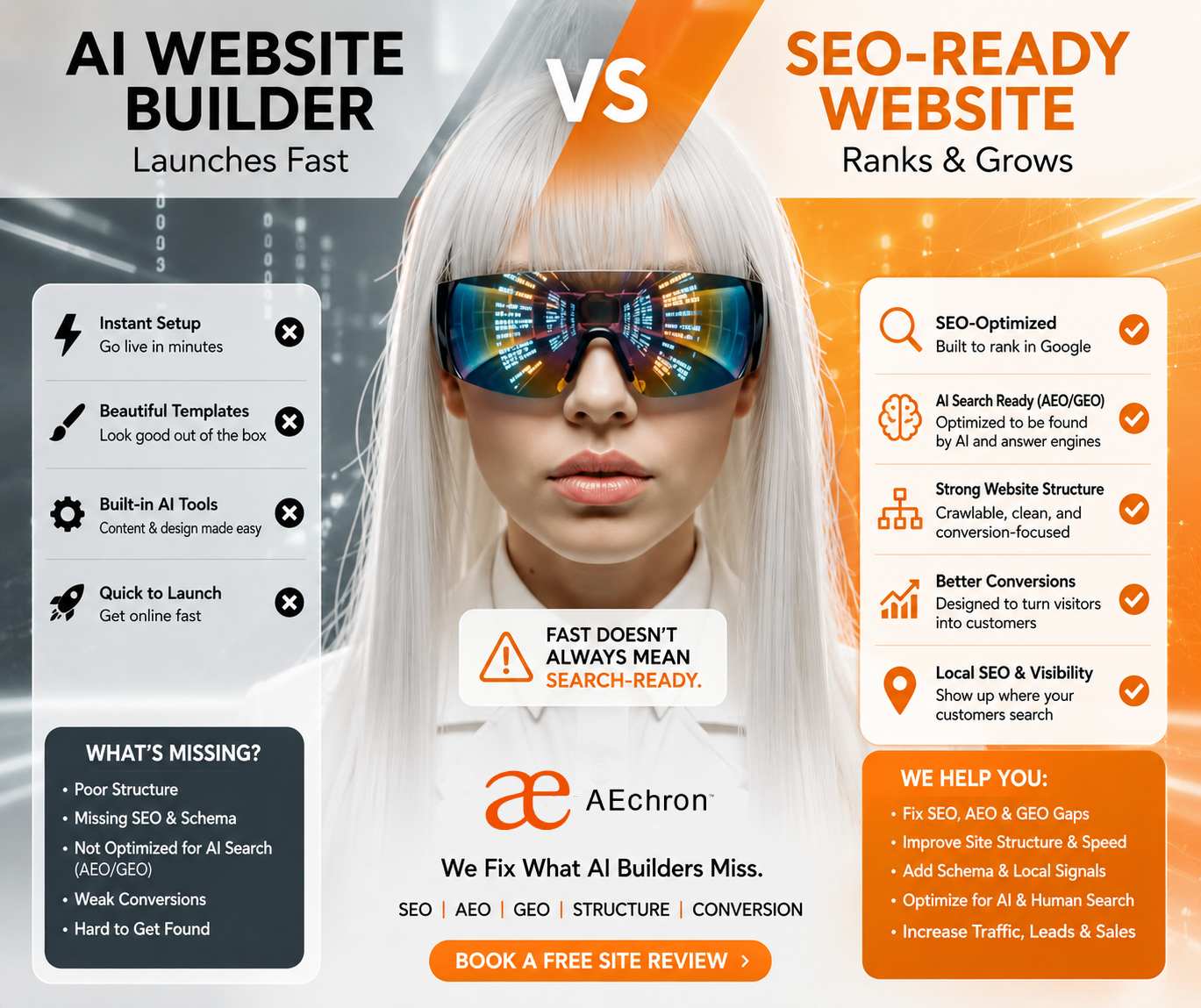
AI website builders have changed how quickly a business can get online. That is a real advantage. A site that once took weeks can now be drafted in hours. But a fast launch is not the same thing as a SEO-ready website.
Many AI-built websites look finished on the surface while still missing the structure search engines and AI systems need. The most common problems are not visual. They are hidden in page titles, headings, content depth, internal links, schema markup, crawl access, and conversion paths.
Fast launch does not mean search-ready
AI builders are useful for getting a first version online, testing a business idea, or creating a simple page quickly. But search visibility depends on more than whether a page exists. Google and AI search systems need clear signals about what the business does, who it helps, which questions it answers, and why the page should be trusted.
Common SEO gaps in AI-built websites
The biggest AI-built website SEO gaps usually include weak page titles, missing meta descriptions, generic headings, thin service pages, duplicate copy, missing image alt text, broken links, and poor internal linking. These issues make it harder for search engines to understand the site and harder for visitors to know what to do next.
AEO and GEO need clearer answers
Traditional SEO helps your pages rank in search results. AEO helps your content answer questions clearly. GEO helps AI systems understand and recommend your business in generated answers. To support all three, your site needs answer-ready content, FAQ sections, structured pages, schema markup, and strong internal links between related topics.
Schema markup matters
Schema markup gives search engines and AI systems structured information about your pages, services, articles, FAQs, and business. Without it, your content may still be readable to humans, but less clear to machines. A good AI-built website cleanup should include schema validation, canonical URLs, Open Graph tags, and technical checks.
Content needs depth and direction
Many AI-built sites use broad, polished-sounding copy that does not answer enough real customer questions. Better content explains the service, who it is for, what problems it solves, what the customer should expect, and what action to take next. This is where AI-assisted content still needs human strategy and editorial judgment.
How AEchron helps
AEchron helps small businesses review and improve AI-built websites for SEO, AEO, GEO, AI search visibility, structured content, schema markup, internal links, content gaps, authority signals, and conversion paths. The goal is simple: make the website easier for people, Google, and AI systems to understand.
FAQ
Are AI-built websites bad for SEO?
No. AI-built websites are not automatically bad for SEO. The issue is that many launch before page optimization, schema markup, content structure, internal links, and conversion paths are properly reviewed.
What SEO gaps are common on AI-built websites?
Common gaps include weak page titles, missing meta descriptions, thin content, unclear headings, missing schema markup, poor internal links, missing alt text, and pages that do not answer customer questions clearly.
Can AI-built websites be improved for AEO and GEO?
Yes. AI-built websites can be improved with answer-ready content, FAQ sections, schema markup, structured service pages, clear brand context, authority signals, and trusted citations.
Built your website with AI?
AEchron can review your site and identify the SEO, AEO, GEO, structure, content, and conversion gaps that may be holding it back.
Request a website review →