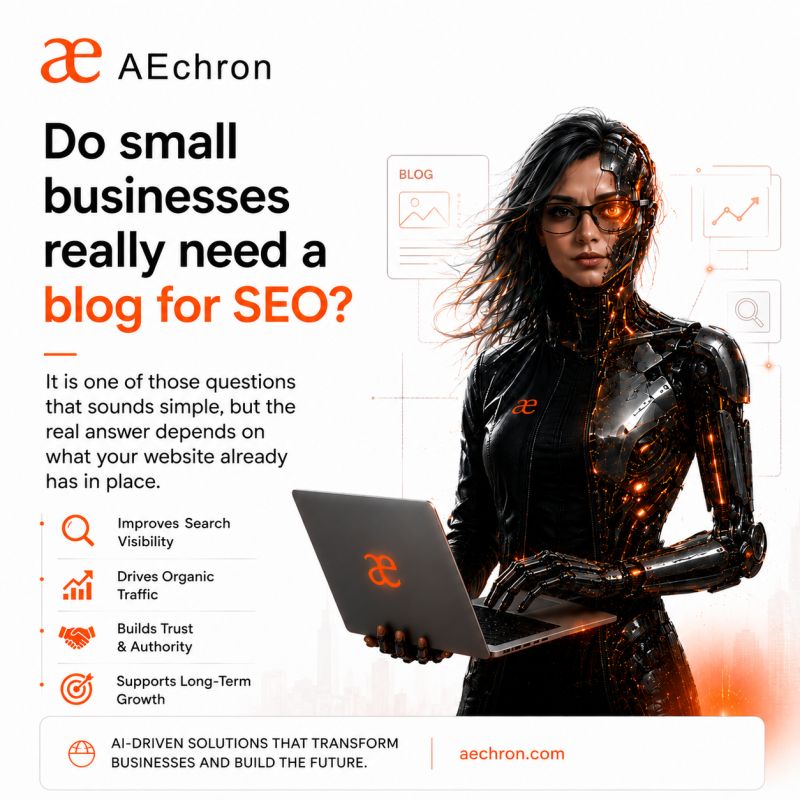
A lot of small business owners hear the same advice: “You need a blog for SEO.”
Sometimes that advice is right. Sometimes it is incomplete. A blog can help your website show up for more searches, build trust, and answer questions before a customer calls you. But blogging alone will not fix a weak website, unclear service pages, or a poor local SEO foundation.
The better question is not, “Do I need a blog?” The better question is, “What kind of content would actually help customers find, understand, and trust my business?”
A Blog Helps When It Supports Search Intent
A good blog is not a place to post random company updates. It is a place to answer the questions your customers are already asking before they decide to buy.
For example, a local service business might write about pricing, timelines, common mistakes, seasonal needs, comparisons, checklists, or how to choose the right provider. Those topics can attract people who are actively researching a problem your business solves.
That is where blogging helps SEO. It gives search engines more useful pages to understand your expertise, and it gives customers more reasons to trust you before they reach out.
But a Blog Is Not the First Fix for Every Website
If your homepage is vague, your service pages are thin, or your contact information is hard to find, starting a blog may not be the best first move.
Your core pages matter most. Search engines need to understand what you offer, where you operate, who you help, and why your business is credible. Customers need that too.
Before publishing blog posts, make sure your most important pages are clear and useful.
-
Your homepage
Explain what your business does, who you serve, and what action visitors should take next.
-
Your service pages
Give each main service its own page with details about the process, benefits, pricing factors, FAQs, and proof.
-
Your location signals
Make your service area, business address, Google Business Profile, and local trust signals easy to understand.
-
Your proof
Add reviews, testimonials, case studies, project examples, credentials, or other signals that show customers they can trust you.
What Should a Small Business Blog About?
The best blog topics usually come from sales calls, customer emails, consultations, and repeated questions. If customers keep asking the same thing, that is often a strong content opportunity.
Start with topics that connect directly to buying decisions.
-
Pricing questions
Examples include “How much does local SEO cost?” or “What affects the price of a website redesign?”
-
Comparison questions
Examples include “SEO vs Google Ads” or “Website builder vs custom website.”
-
Problem-based searches
Examples include “Why is my website not ranking?” or “Why am I getting traffic but no leads?”
-
Decision guides
Examples include “How to choose an SEO agency” or “What to ask before hiring a web designer.”
How Often Should You Publish?
Consistency helps, but quality matters more than volume. One useful article per month is better than four thin posts that do not answer anything clearly.
A small business does not need to become a media company. You need a practical library of helpful content that supports your services and answers real questions.
If you are just starting, aim for one strong post each month. Over time, those articles can build a useful content base that helps both customers and search engines understand your business.
So, Do You Really Need a Blog for SEO?
You do not need a blog just to have a blog. You need helpful content that supports your business goals.
For many small businesses, a blog is worth it when your core website pages are already clear and you have real customer questions to answer. It can help you show up for more searches, build authority, and earn trust before the first conversation.
But if your service pages are weak, fix those first. Your blog should support your SEO foundation, not replace it.
At AEchron, we think of blogging as part of a larger visibility system. Your homepage, service pages, local SEO, reviews, and blog content should all work together to help customers find you and understand why your business is the right choice.
Related Reading
- Google Search Central: Creating helpful, reliable, people-first content
- SEO Isn’t Dead. It’s Becoming AI-Ready.
- The Local SEO Checklist: 9 Steps to Help Customers Find Your Business
Need blog topics that actually support SEO?
AEchron can turn your services, customer questions, and local search opportunities into a practical content plan that supports SEO, AEO, and long-term visibility.
Build your content plan →